
Jan Simpson Studio Glass t/a Koru Arts
Heritage Stained Glass combined with contemporary fusing and casting techniques.
Contact
Bognor regis
West Sussex
United Kingdom
PO22 9HJ


About
Jan Simpson is a stained glass artist and educator specialising in the integration of heritage leaded light techniques with contemporary kiln-formed and cast glass processes. Originally trained in traditional stained glass, she has worked in the field for over 30 years, combining conservation-based methods with innovative approaches to material and form.
Stained glass is now widely recognised as an endangered heritage craft within the UK, with declining specialist training routes and a diminishing number of practitioners skilled in traditional leading and glass painting. Jan’s practice responds directly to this fragility. She is committed not only to preserving technical knowledge, but to ensuring the craft remains viable, visible, and relevant within contemporary architectural contexts.
Working from her studio in Bognor Regis, she produces architectural commissions, independent artworks, and teaches small-group courses in traditional leadwork, glass painting, and kiln-formed techniques. By maintaining hands-on transmission of skills alongside active professional practice, she contributes to the safeguarding of endangered processes through both making and teaching.
Jan also tries to return annually to New Zealand — her homeland — to teach stained glass during the UK winter months. Specialist heritage stained glass training is extremely limited in New Zealand, and she is committed to transferring traditional leaded light and painting skills internationally, ensuring that these processes are not geographically restricted or lost through lack of access. Her overseas teaching reflects a broader commitment to safeguarding the craft through skill dissemination beyond the UK.
A graduate of Glass and Ceramics at University for the Creative Arts (Farnham), Jan’s recent work focuses on expanding the structural and sculptural possibilities of stained glass. She has developed methods for incorporating cast and kiln-formed bas-relief elements directly within leaded compositions, introducing three-dimensional modelling while retaining the structural integrity of the traditional lead matrix. This integration allows stained glass to move beyond purely pictorial surface into sculptural form, without abandoning its core architectural principles.
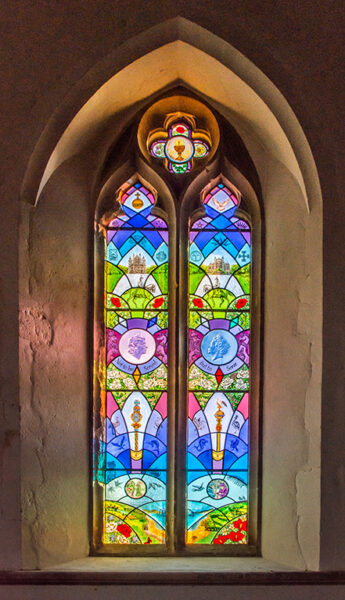
A significant example of this approach is The Platinum Window, installed in December 2025 at St Mary’s Church, Felpham. Created over a two-year period, the window combines traditional leading and painted glass with cast relief elements developed through mould-making and kiln processes. The work demonstrates how heritage stained glass techniques can accommodate contemporary three-dimensional interventions while maintaining structural discipline, durability, and narrative clarity within an ecclesiastical setting.
Jan views contemporary development not as departure from tradition, but as its continuation. By extending the material language of stained glass through bas-relief casting, kiln forming, and flame-worked integration, she works to secure the future of the craft — ensuring that endangered skills are not only preserved, but meaningfully evolved and transmitted to new generations, both in the UK and internationally.
Mini craft gallery


蛇 Shé – The Serpent Year – Stained, Fused and Bas Relief
MADE BY JAN SIMPSON STUDIO GLASS T/A KORU ARTS

The Platinum Window – St Mary’s Church, Felpham – Quatrefoil
MADE BY JAN SIMPSON STUDIO GLASS T/A KORU ARTS

Platinum Window – St Mary’s Church, Felpham – Excerpt
MADE BY JAN SIMPSON STUDIO GLASS T/A KORU ARTS


Bas Relief – Platinum Window – St Mary’s Church, Felpham.
MADE BY JAN SIMPSON STUDIO GLASS T/A KORU ARTS
